
Guest blog by Monica Bivas, a holistic health coach.
Conception and parenting via IVF are complex and challenging journeys, but they are filled with want, love, and move by sheer willpower. Because of the unique journey IVF parents go through, it may shape their relationship with their children. For many couples, the big question remains whether to tell their children how they came to be or not. For other couples, the concern lies in how their children’s conception may affect their future relationship.
Many studies have been led to understand the possible negative and positive effects of IVF on the parent-child relationship and the child’s psychosocial development. Overall, few significant differences have been found between non-IVF and IVF families. However, a few points have been made regarding autonomy and vulnerability, with IVF children showing behavioral and emotional problems. On the other hand, some studies point to a more positive parent-child relationship in IVF families.
In order to help you navigate parenting to IVF children, we’re going to cover the pros and cons of bringing your child to the knowledge of how they were conceived.
Experiencing IVF
IVF is a challenging experience: it’s an emotional roller-coaster of anxiety, waiting, and unpleasant medical treatments that implicate lots of hormone treatment.
IVF treatments will get your hopes up about getting pregnant, only to get them crushed if the procedure isn’t successful – it’s a fickle journey, and the more rounds of IVF you go through, the more unlikely it seems to be a parent. So, not only do you have to manage these emotions, but you also have to deal with the effects of the hormone treatment, which may make you even more volatile and sensitive and affect how you feel about your body.
Having this understanding of IVF and its toll on people, it’s crucial to comprehend how that will later translate into the parent-child relationship.
Although the studies conducted in parenting IVF children are few and don’t show significant distinctions from non-IVF children, some parenting differences can be explained by the anxiety that marks the process. Couples who have undergone fertility treatment to conceive sometimes feel they’ve experienced pregnancy and parenthood differently, with a stronger need to protect and care. This is, of course, understandable and expected. When someone has gone through so much hardship to become a parent and probably encountered a lot of heartache throughout the way, it’s normal to feel the need to hold on for dear life to that miracle baby. Hence, feeling overprotective and trying to control everything surrounding the child results from a strenuous journey.
Moreover, regardless of the circumstances that led to pregnancy, looking after a newborn is hard work. However, because you’re a new parent with a baby conceived through IVF, you might feel that you can’t complain and should be grateful for having the baby you’ve always wanted. Well, consider this your reminder that it’s okay to ask for help when you need it, whether to your GP, family, or your child and family health nurse.
Discussing IVF
Nowadays, more and more couples are opting for reproduction methods different from natural conception, like IVF or surrogacy. This may be the case for couples facing fertility issues or alternate family structures such as single parents and same-sex couples. Fortunately, technology has made it easier to access these alternative methods and allowed many families to grow.
However, once you opt for IVF, you get a new question in your hands: should I let my child know how it was conceived? Well, at some point, parents need to decide what to say to their children about the IVF treatment. The best-case scenario would be for the child to hear about their birth from their parents first, instead of finding out accidentally from someone else. Otherwise, for a child to discover the conditions of their conception through a relative or peers could lead to distrust in their parents and build a negative sentiment about the topic.
For that reason, similar to adoption cases, parents are generally counseled to explain to their children how they were conceived or brought into the family in an age-appropriate way.
As children grow older and curious, they start asking questions about how and where they came from, and by hiding it, parents may be postponing a revelation that will be much harder to deal with down the line. Niharika Mehta, a psychologist in the Hiranandani Hospital Vashi, highlights the child’s medical history as a reason for sharing their background: once a child becomes an independent adult, knowing their biological composition can make a difference in their health.
Despite the psychological and medical benefits of owning up IVF to your child, it’s a topic that still holds a sense of shame or inadequacy. So, it’s understandable why you’d feel constrained discussing it. Yet, it’s crucial that the parents address the stigma associated with IVF within themselves and move past it so that, later, they can discuss it openly with their child.
Remember that not only have you put in time and money, but you’ve given this procedure and dream all of your mental, emotional and physical energy, and attention. You gave your all to bring your child to life, so don’t be ashamed. Instead, take pride in your journey!
How to talk to your child about IVF
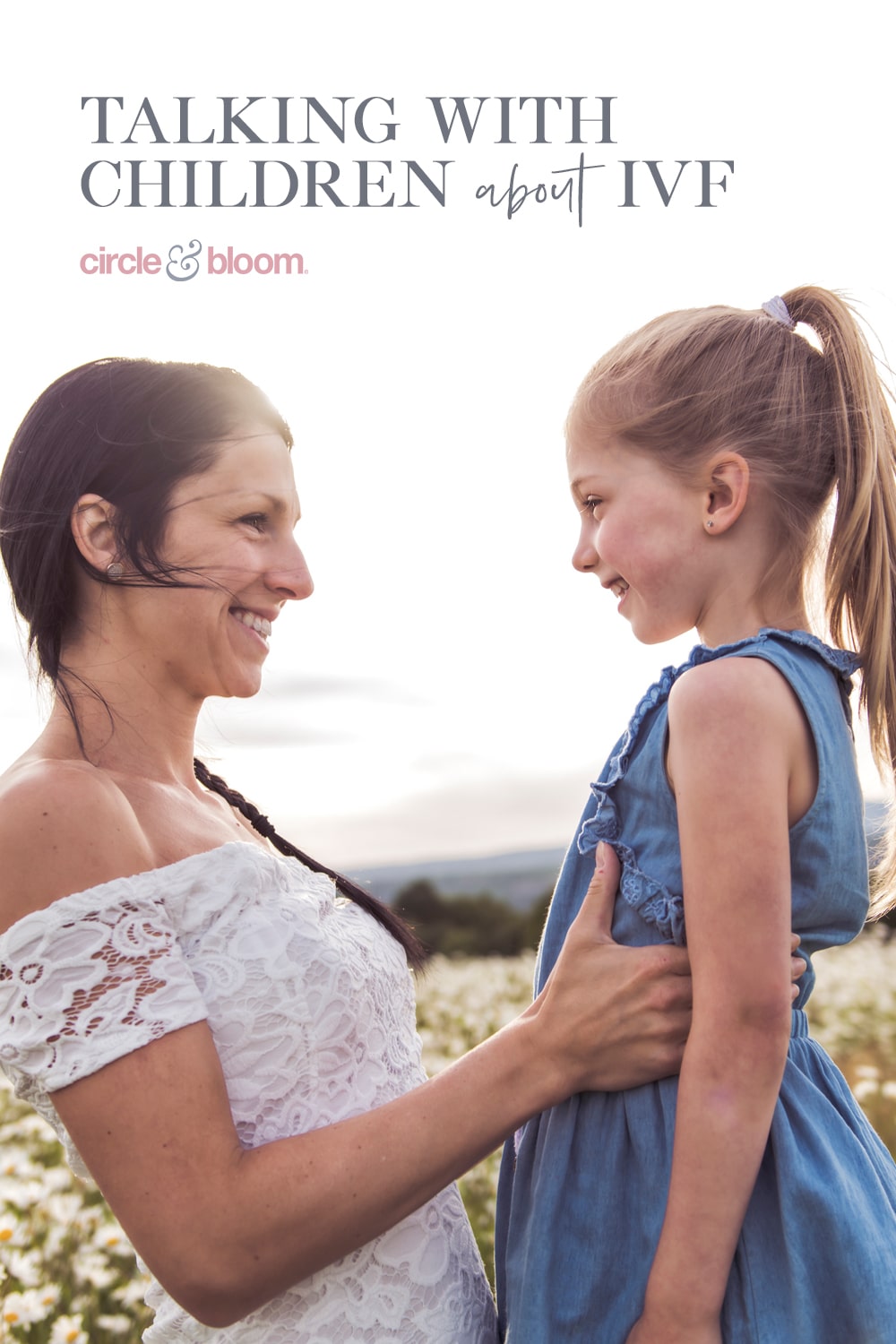
Discussing IVF with a child is never an easy task, and it isn’t a one-time conversation. Instead, it’s an ongoing process that should start at a very young age, as it will make both parties more comfortable with the topic and make understanding and acceptance of the matter easier.
Parents can start by explaining how babies are made and the various family structures, introducing the child to books on IVF through diagrams and stories. You don’t need to get into the procedures in detail at that age but be open to discussing it if the child finds all the details themselves over time.
The reason why you should introduce IVF to your child early instead of waiting for their preteens or teenage years is that they are already grappling with their sense of identity. Therefore, only filling them in at that age will make matters trickier.
Furthermore, in the case of sperm or egg donation, there might be differences in physical characteristics, which may leave the child wondering why they don’t resemble the parents. By not approaching this subject, you may affect their identity development, so be sure to build a safe space for that discussion.
Finally, though it is important to tell your child how they were born, the most crucial aspect you should always highlight is your love for them. The most upsetting fact that your child will have to deal with isn’t where they came from is knowing how that affects their relationship with their parents. So, reassure your child that regardless of IVF, you’re a family, that you love them and support them, and are open to unbiased conversations about the issue.
To sum up…
Although IVF strongly influences the experience of pregnancy and parenthood, it doesn’t have to be determinative for the parent-child relationship or the child’s development. By working through feelings and stigma brought by IVF, whether with a counselor or loved ones, parents will be able to get to a place where they won’t feel ashamed of IVF or unsuited to care for a child.
Likewise, an emotionally and psychologically stable parent has all the tools necessary to approach the topic of IVF with their children in a healthy manner and provide them with good care and life.
Nevertheless, the way one handles the IVF process and chooses to disclose the experience to their child is highly personal, so don’t worry if you’re still figuring it out. And remember to take pride in your journey! It made you a parent, after all.

Monica Bivas was inspired by her own experience with IVF, her road to motherhood was not an easy one and she knows what it is to walk in the shoes of fertility issues, and she now works with couples on their own IVF journey.
She promotes love, positivity and her main mantra “Where your thoughts go, energy flows”. Monica coaches and mentors women and couples all over the world going through IVF. She offers three different 1:1 programs on IVF depending on what fertility journey you are on, as well as group programs. Learn more about Monica by visiting her website.


Leave a Reply