Guest blog by Nadia Tyson, a freelance writer, photographer, painter and teacher.
When I was in my early thirties, I knew that I wanted to preserve my fertility by freezing my eggs before my natural fertility began to decline. Science had come a long way since the first in vitro fertilization (IVF) baby was born in 1978, and I was ready to take advantage of it. As a single woman living in Venice Beach, CA, I wanted to have the option of having children when the time was right for me without feeling the pressure of society’s expectations. Freezing my eggs gave me a sense of empowerment and security.
By the time I reached 34 years old, I was ready to take the leap. To begin the process, I made an appointment with USC Fertility and underwent several tests to assess my hormone levels and how many follicles I could produce. The results were encouraging, and my fertility doctor predicted that I could retrieve around 20 eggs.
I met with a USC nurse two weeks before commencing my hormone treatments, and she provided me with birth control pills to take for the next ten days. The purpose of these pills was to synchronize my ovulation cycle. The nurse also demonstrated how to self-administer the hormone drugs into my abdomen using a needle. Although it appeared daunting, the process was much less painful than I had anticipated.
For the following eight days, I self-administered hormone drugs. Gradually, my stomach began to expand as each day passed. Additionally, I had frequent check-ups with my doctor to monitor the progress of the treatments.
The egg retrieval procedure took about thirty minutes and involved being placed under general anaesthesia. I woke up with temporary small holes in my uterine tissue where the eggs had been extracted. My ovaries were swollen afterwards and I experienced what felt like heavy menstrual cramps. However the wounds healed within a couple of weeks.
I soon found out that the process was a success, as I had a total of 23 eggs harvested and frozen in liquid nitrogen. My fertility doctor estimated I had around an 80% chance of having children up until the age of 52, which gave me a sense of relief and let me let go of the worry about my biological clock. It was definitely worth the pain and effort.
Fast forward to a couple of years later, I met my soulmate and we got engaged. We were both healthy and athletic and were excited to start trying for a baby at the age of 39. However, as each month passed with negative pregnancy tests, we began to feel more and more disappointment. We tracked every cycle and used countless ovulation sticks, but nothing seemed to work.
Finally, after a relaxing trip to Hawaii, we received a positive pregnancy test. We were ecstatic and began planning for our little one. However, at our two-month ultrasound, our doctor found that our baby’s heartbeat had stopped. The subsequent miscarriage left me devastated and determined to do everything in my power to prevent that heartache from happening again.
I contacted my fertility clinic where I had frozen my eggs and our fertility doctor suggested we complete a series of tests before attempting IVF. Once we were given the green light, we unfroze 13 of the 23 eggs and successfully created 5 embryos from 10 eggs. Our initial attempt with the first embryo was unsuccessful in attaching to my uterine lining. However, we tried again a month later with our second embryo, and it worked!
Today, at the age of 42, I am the proud mother of the most beautiful eleven-month old girl. She has brought us more joy than we could have ever imagined. I am extremely grateful to have had the opportunity to preserve my fertility and to have gone through the IVF process, despite its challenges. My story has already inspired several friends to do the same, and I hope that sharing my experience will help to normalize egg freezing and encourage others to consider it as an option.
When going through the process of fertility treatment, what helped me the most was staying calm and hopeful. I realized that mental wellness plays a huge role in your overall health and fertility health as well. I recommend the Circle and Bloom meditation program for anyone going through any stage of their TTC journey, whether you’re just starting to try to conceive, have been on a long fertility journey, or are unsure about the next step in your journey.
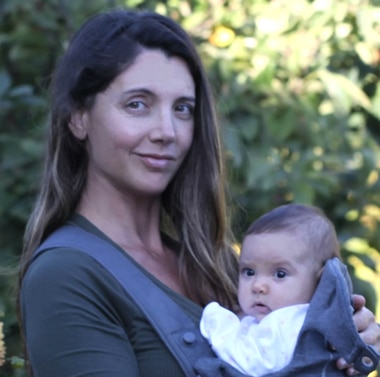
Nadia Tyson is a freelance writer, photographer, painter and teacher. Her portfolio includes contemporary abstract paintings, portrait and wedding photography, documentary photography and travel chronicles published in various magazines. Nadia resides in Los Angeles, California and shares her passion by teaching photography to middle school students while raising her baby.

Leave a Reply